
Behind the Scenes: Making the Al-Hassan Sound Map
Around 80,000 workers are employed in Jordan’s clothing factories. Over two thirds are international migrants, living in dormitories set beside the factories. Both factories and dormitories are clustered in secluded industrial zones (mudun sina’iyah) across the country, beyond the sightlines of citizens and consumers. Bridging this distance by transporting users within the walls of Al-Hassan, our interactive sound map lets people experience different sites of life and labour for workers in the oldest industrial zone in Jordan. Here, Katharina Grüneisl, project lead in Jordan, takes you behind the scenes of the production of this unique map of Jordan’s industrial soundscape.
All photos © Grüneisl 2025 Jordan
The sonic and visual universe you can navigate on our sound map is first and foremost the outcome of two weeks of intensive research, recording and drawing in and around the Al-Hassan industrial zone in the north of Jordan in April 2025.
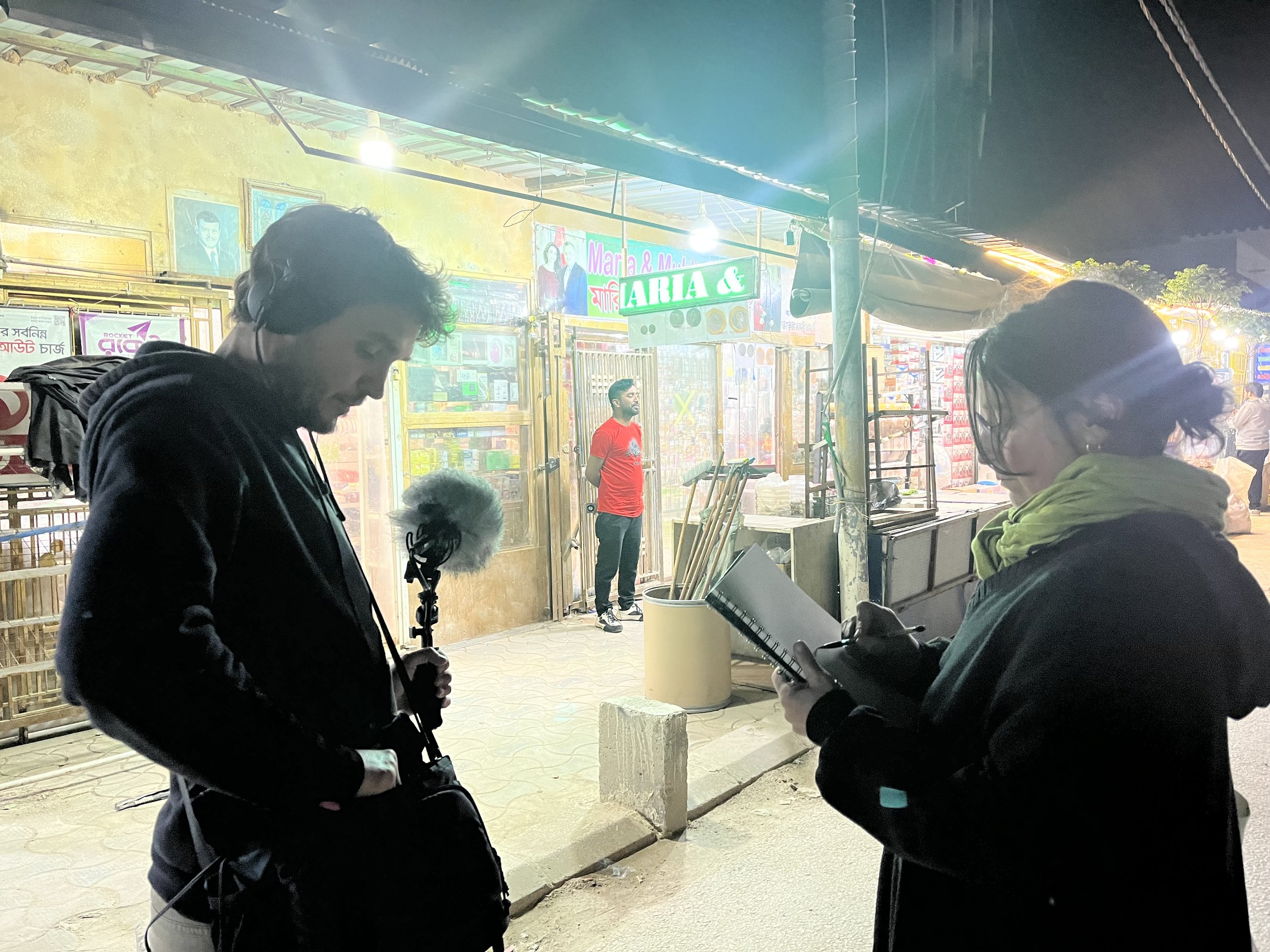
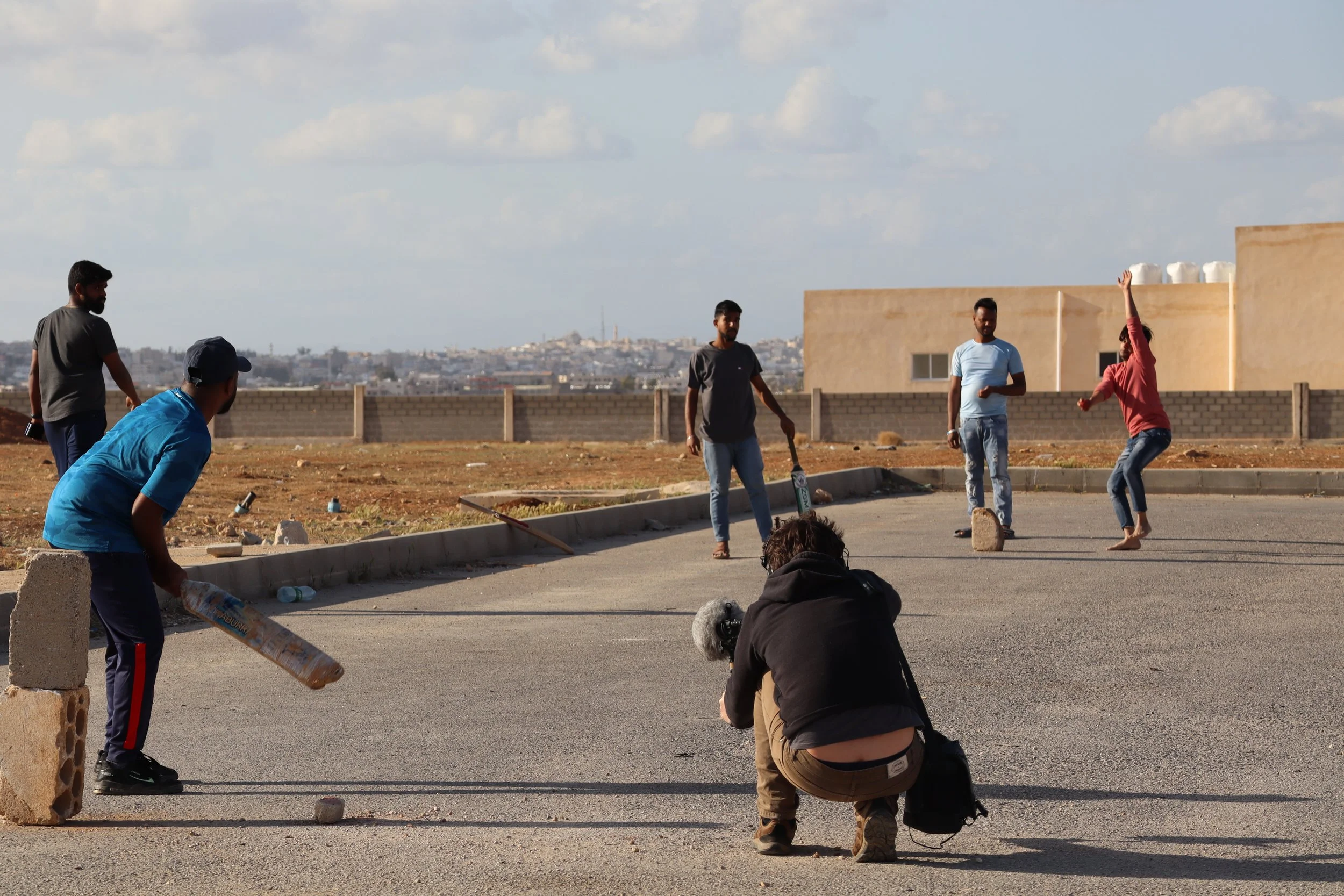
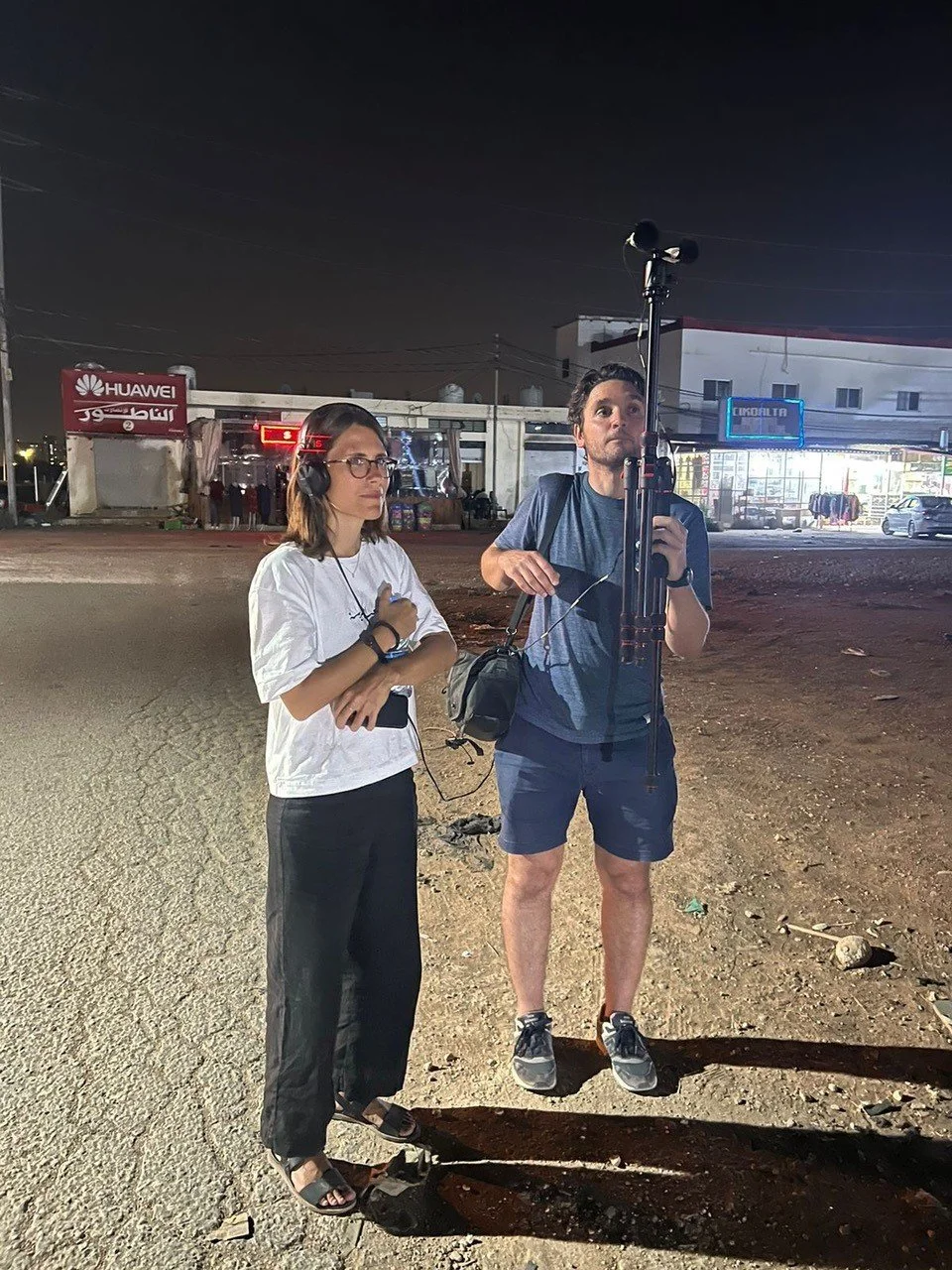
David Lagarde – geographer, independent cartographer and sound artist – captured the unique soundscape of Al-Hassan’s clothing factories, money transfer machines and trash flying in the dust storms, with the diverse microphones he carried tirelessly on his back.
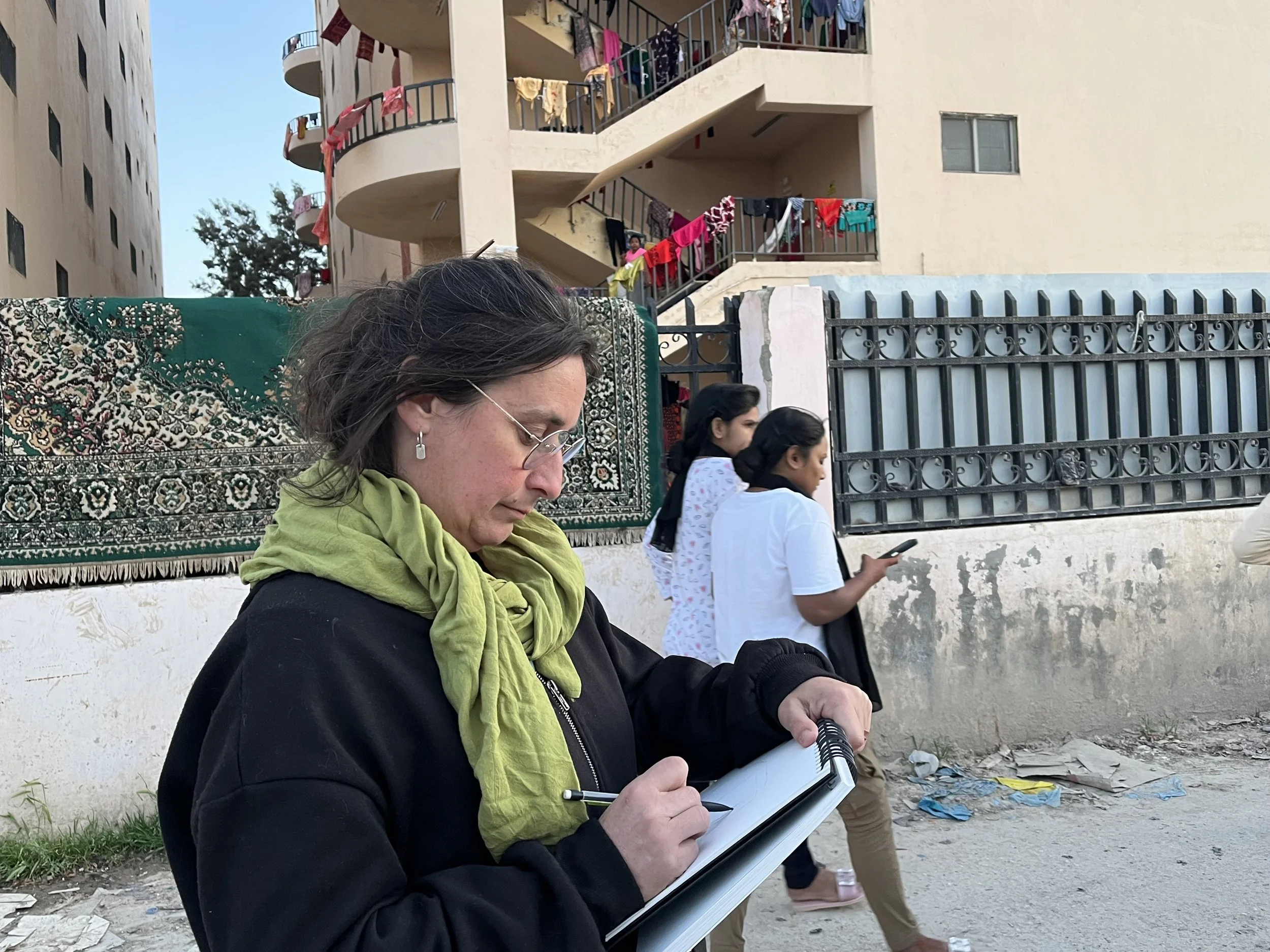
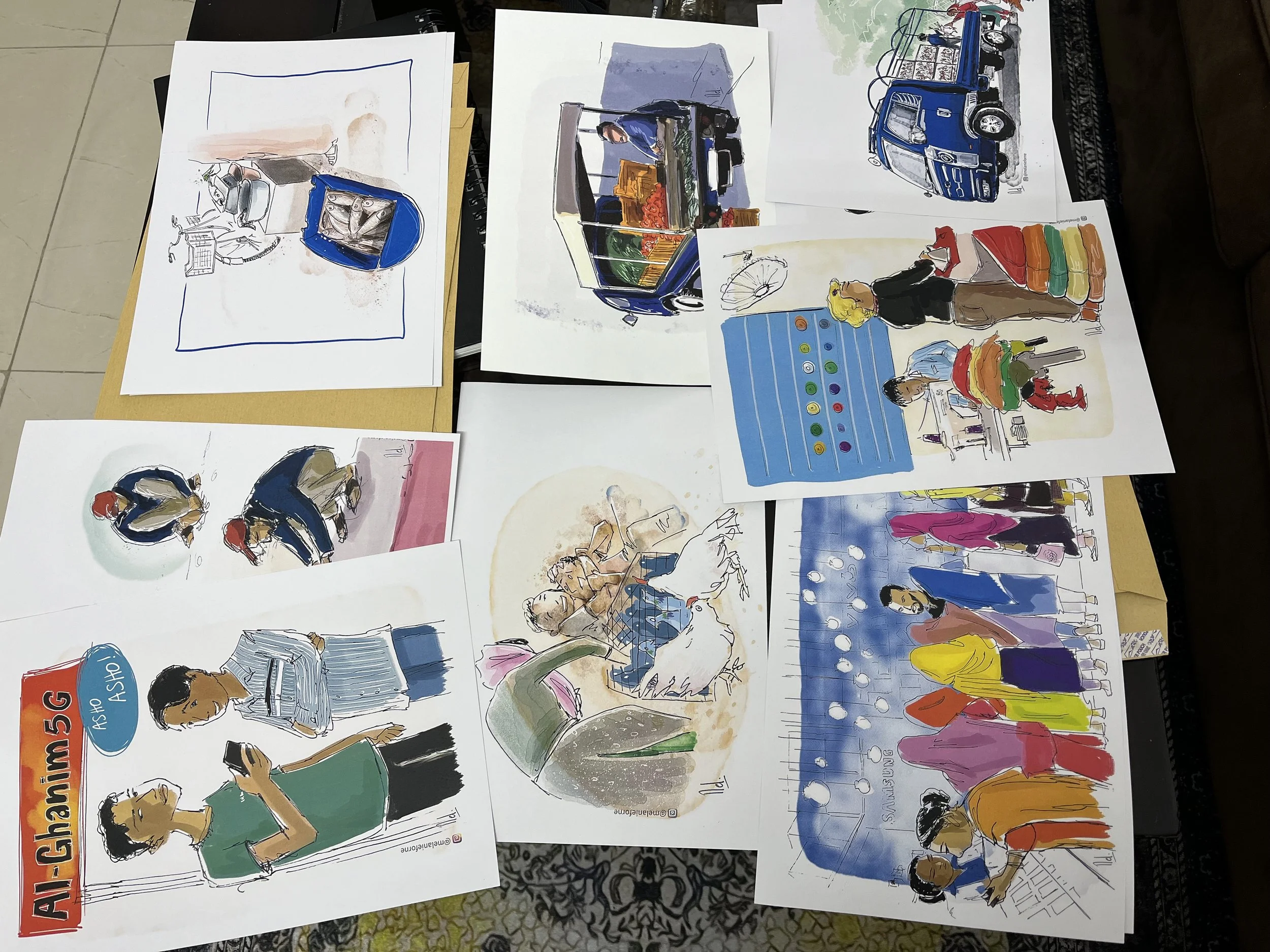
Mélanie Forné – archaeologist, graphic designer and independent illustrator – followed David and his microphones from factory canteens into sari shops and to marketplaces, sketchbook and pencil always in hand to take in the dense visual impressions, ambiances and aesthetics of Al-Hassan’s life worlds.
Katharina Grüneisl – geographer and lead researcher in Jordan for the Invisible Women Invisible Workers research project – had already conducted extensive fieldwork with garment workers and industry stakeholders in Al-Hassan (2023-2025), introducing David and Mélanie to diverse interlocutors and places, and proposing stories to be (re-)written through sound and illustration.
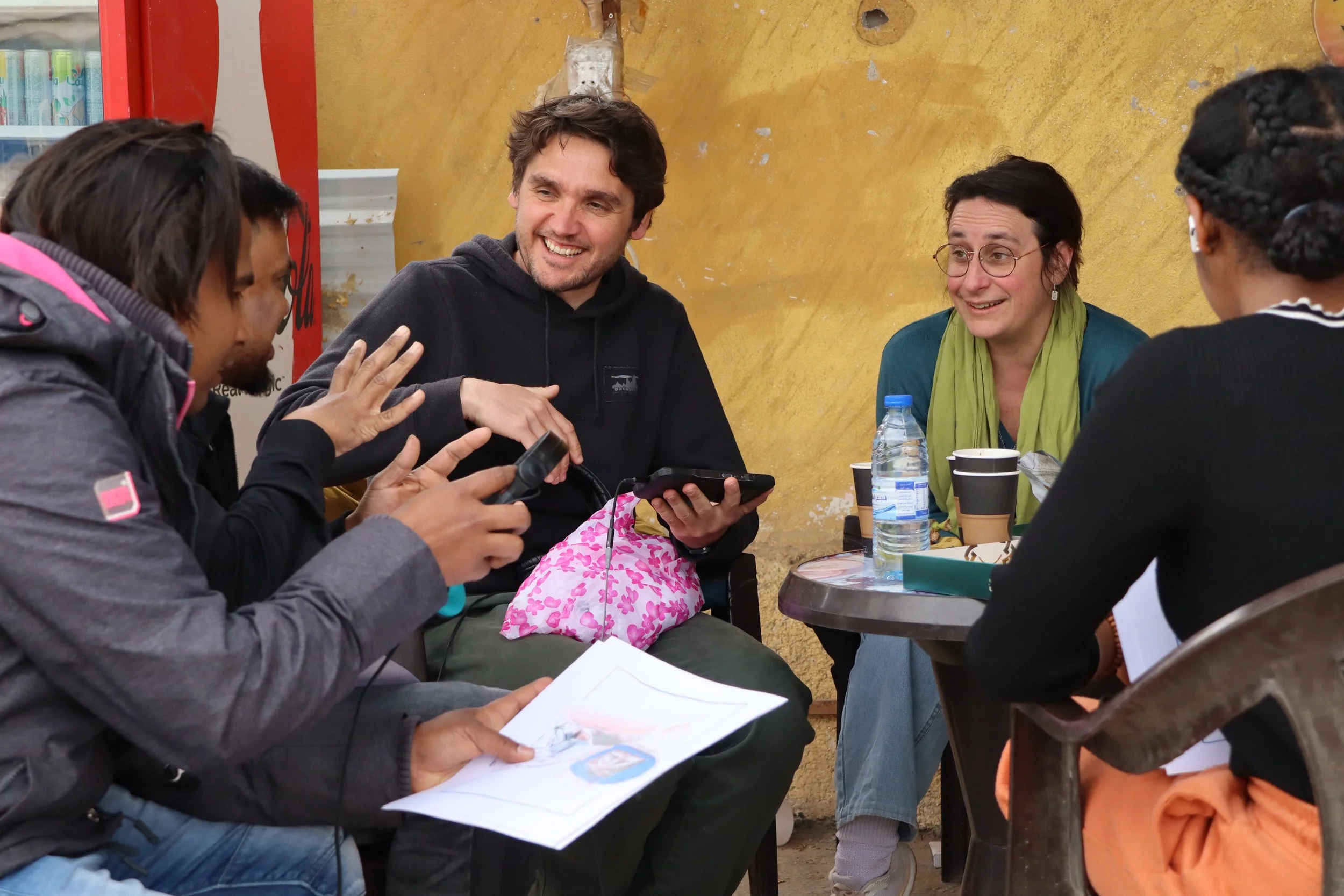
This collaborative research process of simultaneously recording sound, images and stories was experimental and new for the three of us. Our hyper-visibility as a research team – with equipment that made us look like a film crew – necessitated long introductions and explanations. Yet suspicion rapidly transformed into interest when we presented an illustrated sound capsule Mélanie and David had produced in Al-Wehdat market in Amman as an example of what we planned to do, or when we invited interlocutors to listen to sounds in their environment through David’s microphones or to see Mélanie’s sketches.
Sound recordings were perceived as less threatening than photo or video footage, enabling us to enter factories, canteens and unlicensed workshop spaces that usually remain concealed from public view. Mélanie’s in-situ drawings meanwhile were perceived as a positive act of recognition, giving value to people’s modest shop spaces and everyday activities. Different migrant workers moreover became actively involved in sound recording and story-telling.

We completed part of the post-production during late evenings in our rented Irbid apartment: cutting and editing sound; fine-tuning, colouring and digitizing drawings; and patching together sound and drawings to construct coherent sonic and visual impressions and storylines.
This in-situ process enabled us to present a first, finished sound capsule to our participants at the end of the two-week research. As we made the tour of Al-Hassan to show the first results, we also handed out Mélanie’s portraits as high-quality colour prints on paper to the diverse interlocutors populating our map, stirring much joy, laughter and surprise.
The rest of the post-production then took place in our respective workplaces, back in France and the UK. Sara Lana, a Brazilian artist and developer, transformed our cartography and illustrated sound capsules into the beautiful, interactive, virtual map you can navigate.
Acknowledgements: This project is the outcome of the work and collaboration of many people, and we would like to explicitly thank:
The Al-Hassan garment factory workers, factory managers, market traders, and others who allowed us to record and portray their stories and spaces
10 Tooba and Heba Zakarnah whose mapping work in Al-Hassan greatly facilitated our cartography work
The Al-Hassan Workers Centre team, especially Natasha, Farnaz, Suneetha, Shahed, Cathie, and Mithun, for their endless trust and support
Alli Roshni for the generous help with translation
The General Trade Union of Workers in Textile, Garment and Clothing, especially Ahlam and Raouan, for their warm welcome and precious introductions
IFPO Amman, especially Najla Nakhlé-Cerruti and Mariangela Gasparotto, for their enthusiasm, interest and welcome
Le Grand Entrepôt, and especially Delphine Mercier, who first brought us in contact and allowed us to conduct research together with Taher Labadi (IFPO) in 2024
Invisible Women, Invisible Workers, and especially Sabina Lawreniuk – as well as all the support staff in the School of Geography at the University of Nottingham – who believed in, supported and co-financed this project
Research England and UKRI, for vital support through the participatory research fund